Procrastination, Perfectionism and the Gift of Constructive Criticism


Anyone else ever pull an all-nighter to meet a deadline? Or worse, miss an opportunity entirely because the window closed before you acted?
Well, hello, my fellow procrastinators.
Some of my 11th-hour adventures have led to exhilarating, funny stories, but they have also led to a lot of frustration, disappointment, and confusion.
Why do I wait until the last possible moment, even when I have every good intention and all the tools I need?
What Are We Really Avoiding?
Occasionally, I procrastinate on things I just don’t want to do. Taxes, parking tickets, organising the endless list of summer activities for my kids. But most of the time, when I am procrastinating, it is because there is something I don’t want to face.
A difficult conversation. A project where I am out of my comfort zone and taking a risk. A job application where the risk of rejection is real. I am not putting off the work itself so much as the difficult emotions I don’t want to feel.
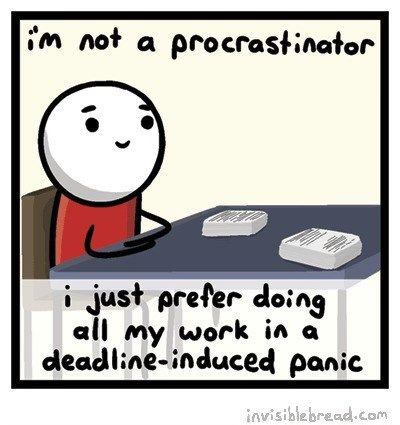
Research supports this. Procrastination is often a short-term mood repair strategy. We delay a task not because we’re lazy, but because it triggers something uncomfortable, like anxiety, shame, or self-doubt. Poor emotional regulation, not poor time management, is one of the strongest predictors of procrastination.
The Link Between Procrastination and Perfectionism
Procrastination and perfectionism often go hand in hand. Contrary to the reputation of procrastinators as not caring, it is often that we care so much about getting it right that we have trouble getting started at all.
More than once, I have put off responding to an email because I did not immediately have the perfect response. But you know what is worse than not responding perfectly? Never responding at all.
Perfectionism can be draining, increasing the risk of burnout and depression. And when we tie our worth to flawless outcomes, we miss out on the freedom to take risks and learn from our mistakes.
Some Good News for Procrastinators
There is some good news for procrastinators. Moderate procrastination is actually linked to enhanced creativity. People who pause to reflect on the best idea, rather than jumping in with the first one, are more likely to produce original work. The delay allows time for incubation and divergent thinking.
But the key word is moderate. A reflective pause is helpful, especially for complex or creative tasks. But if we wait too long for the perfect idea or moment, we risk missing the opportunity to act.
Extreme procrastination still sabotages performance, leading to poor work quality or missed deadlines. The sweet spot is intentional delay, where you are thinking, researching, letting ideas simmer, then moving into action. Not avoidance, but reflection.
How to Move Forward as a Procrastinator
1. Start small
A big project can feel paralysing. But if we zoom in and identify just the next right step, we create momentum. In a study of procrastinators, in this case, graduate students working on their thesis or dissertation, one of the most effective tools was writing just 15 minutes per day.
Many of us feel that 15 minutes is not enough to accomplish anything, but the power is in making a start. Even a messy draft or rough outline is easier to improve than starting with a blank page.
2. Acknowledge the uncomfortable emotion
Simply naming the feeling we are trying to avoid — rejection, anxiety, overwhelm — can reduce its power. Repressed emotions tend to grow stronger, while identifying what we are feeling, even without needing to fix it, can help us find the courage to move forward anyway.
The awkward draft, the uncertainty, the first step, these are signs of growth, not failure. Discomfort is part of the process.
3. Don't wait to feel passionate
We are often told to "follow our passion," but that advice is incomplete, especially for perfectionists. If we are not instantly great at something, we assume it is not meant for us.
But research shows that passion often grows through practice. As we build skill and confidence, our enjoyment and motivation increase. This requires allowing ourselves to be beginners and to make mistakes.
Instead of chasing passion, follow your values. Do what feels meaningful, true, and worthwhile. It might feel clumsy at first, but if you keep going and stay open to feedback, you will likely find that passion builds over time.
4. Let go of perfect and learn to take criticism
I consider myself a “recovering perfectionist.” There is still a strong part of me that wants to throw the towel in on any project, relationship, or idea that feels flawed. I do not like to fail.
But I also know that it is through the mistakes and the failures, with feedback from people I trust, that I can achieve the most impactful outcome. Embracing risk and error, and staying open to criticism with curiosity and a clear mind, is what allows us to keep growing.
Criticism is hard to receive, and even harder to give. Most people won’t risk your disappointment or anger to tell you the truth. So when someone cares enough to offer honest feedback, it’s worth thanking them for their investment.
At the same time, we are not required to internalise every negative comment. A good rule of thumb is not to take criticism from anyone you would not take advice from.
5. Decouple being a failure from failing
Focusing only on success or the end product puts us under a huge amount of pressure. But if we focus on the process, we lower the stakes and make room for learning.
When I learned to ski as a kid, my dad used to tell me that if I wasn’t falling, I wasn’t learning. The same is true in most other areas of life. A certain amount of failure in our work is a sign that we are stepping outside our comfort zone and challenging ourselves.
Of course, if it is all failure, we may need to reassess. But if we are only engaging with projects where we know we will succeed, we are missing a crucial opportunity to grow.
We’re All Procrastinating on Something
Some of the most painful forms of procrastination don’t involve deadlines. They involve dreams we haven’t started. A personal project. A career shift. Something that matters deeply.
At 41, perhaps thanks to my very real love of sleep, it has been a long time since I have pulled an all-nighter or missed a deadline.
But there are other projects in my life that I continue to put off. This kind of avoidance often goes unnoticed, but it carries a real cost: regret, stagnation, the feeling that something important is slipping by.
I recently came across a visual tool where each circle represents one week of a 90-year life. When you see them all laid out, there really are not that many.

Whether it’s applying for a job, reaching out to someone we admire, joining that community project, or making a career shift, pick something small and take the first step. Tell someone who will support you and hold you accountable. Make space in your schedule for daily engagement. Get something down on paper, even if it feels rough.
Progress doesn’t always feel dramatic. But over time, small, consistent actions shape the direction of our lives.
You don’t have to feel ready. You just have to begin.
Want to learn more?
Check out Tim Urban’s very funny and insightful TED Talk, Inside the Mind of a Master Procrastinator, or listen to Adam Grant’s WorkLife episode, The Real Reason You Procrastinate.
What a fantastic post! Thank you! These are such great points and I especially love that some procrastination allows for a more creative response. 💙